


An author shares her experience of a confrontational conversation with a long-time neighbor about race and the Black Lives Matter movement. The author recounts personal stories of her family's struggles with racism and the need for acknowledgment and change.
The author."I’ve had people tell me it 'disgusts' them to see interracial couples," she writes."They’ve told me they don’t understand why Black neighborhoods look so 'ghetto.'"I was outside my house gardening a few weekends ago when a neighbor, whom I had known for almost 30 years, stopped by so I could pet his large, fluffy dogs.
I took my gloves off, squatted down to give the dogs a really good scratching around their ears and felt the sun on my back. What could be better? And then my neighbor said: “Why do you have a ‘Black Lives Matter’ sign on your front lawn when all those people do is kill each other?”“You know I’m Black, right?” I said, standing up as tall as my 5’4” frame would allow, the sun shining on my blond hair. I continued to pet his dogs, because I needed the comfort of petting dogs at that moment, and because I needed to keep my hands busy so they didn’t slap that man’s face.After the usual back and forth of him saying “No!” and me saying “Yes!” and then him trying to gauge exactly “how Black I was” by asking which of my parents was Black and me replying “Both,” we had a very uncomfortable conversation about racism. I told him about my father’s struggles to get an education because guidance counselors and admissions agents would not accept Black people into community colleges or SUNY programs in the 1950s and ’60s. I told him that even though my father was a veteran, he could not be approved to use the GI Bill for college or buy a house, since no one would process his paperwork because he was a Black man. I told him that people painted “Go Home Nigger” on the back of our home when my parents finally saved enough money to build a house in the suburbs of Syracuse, New York. And I told him how “Black Lives Matter” calls attention to the fact that Black people are considered less than white people ― and that needs to stop.I also told him if people don’t understand that Black lives matter, Black people will continue to be murdered by the police and denied opportunities by the establishment. We will not be allowed to participate in the “American Dream,” and we will be made to feel that this is somehow our fault, when it is in fact the fault of a racist society with the full support of our government. This isn’t the first time I’ve had to have this conversation. Encounters like this have been going on for a very long time for me.Both of my parents are Black but have white ancestors. Those recessive white genes were passed on to me, and I was born very light-skinned, with blue eyes and light, wavy hair. This was not a surprise. In both of my parents’ families there are “white” babies who pop up each generation. I have aunts, uncles and cousins on both sides of my family who are also white-presenting.There is the story of my grandmother’s cousin Neville, who left the family in the 1940s to pass for white so he could join the Army and fight in World War II. He married a German girl, returned to Syracuse and never returned to being Black. Family members would see him on the streets and they would look past each other. He was lost to us because he chose an easier way ― and forsook his ancestry. Neville became a cautionary tale for me. I never wanted to be like him. There is also the story of a great-aunt, Annie Mother, who would pass as white to purchase properties and then sell or rent them to Black family members and other Black families who could not find decent, affordable housing. I wanted to be like Annie Mother, so I pursued a career in social justice, specifically issues related to housing. My parents originally tried to purchase a home in Syracuse in the 1960s. Most of the houses they made offers on had deed restrictions that stated the home could not be “sold to Negros.” Determined to own their own home, they decided to build a house, and found some land in a subdivision in Liverpool, New York, where the builder was happy to sell to them. Despite this good news, they soon learned they couldn’t get approved for a mortgage. My dad had a good job at General Electric and my parents had savings, but none of this was enough, because they were Black.My dad accepted a transfer to a position in Alaska, because he could earn double what he’d make in Syracuse. My mom and I moved in with my grandmother for a year and my mom banked all of my dad’s checks. When he returned, my parents paid cash to have their house built in Liverpool.home ― there was no other “home” to go to. We lived in a white neighborhood, and I went to a school where all the other students were white. Before I started kindergarten, my parents had “the talk” with me. If you don’t know about “the talk,” let me explain it to you. “The talk” is about race. It’s about being Black in a world run by white people, where white people make the rules. In order to survive, let alone thrive, you need to know you are Black and know what that means, even if you present as white. My parents were worried. This was 1969. People knew we were Black, and that I would be starting school in a district where there were no other Black children. I didn’t look Black, but IBlack, so we figured I could and would be subjected to racist actions by my peers. We were prepared for groups of white parents to gather at the school to shout at me. Or spit on me. My parents needed me to understand that if this happened, it didn’t mean I was bad. It meant the adults were bad ― and that I’d need to rise above like Dr. King had done.In our home, Dr. King was whom we strived to be. Even at 4 years old, I knew who he was. I was taught King’s principles of nonviolence. My parents marched on Washington with King and hoped for a better world for me. I set off for school the next day, prepared to walk through a gauntlet of screaming hatred. I was on the lookout. But there didn’t seem to be anything happening. If any protesters had been there, they probably wouldn’t even have known I was Black. With my blond braids and my sparkling new outfit from Sears, I might have walked right by them. I was ready to learn ― and learn I did. But just because there weren’t protesters doesn’t mean there weren’t challenges. My kindergarten teacher did not feel it was appropriate for a Black child to learn and play with white children. She left me inside the classroom on my own while the other students played. I stood by the window and cried. My parents complained to the principal ― a child of Italian immigrants ― and he stepped in. I was then permitted to play with my classmates. Worried that my teacher would not engage me in the same ways she did with the other students, my parents worked with me on my alphabet, math and reading every night after dinner. I excelled.When we moved from Syracuse to Rochester, New York, our new neighborhood was also largely white. I didn’t even find this strange. I fit in and made very good friends, some of whom I am friends with to this day. But I always knew I was Black, and forgetting who I was simply wasn’t an option. In middle school, my history teacher told the class that if we really wanted to insult Black people, we should call them “Uncle Toms.” In high school, one student came dressed as a klansman for Halloween, carrying a noose. Another student, wearing blackface and a loincloth, ran around in front of him. When the few Black students and a number of our white classmates complained to the principal about it, we were told we needed to “develop a sense of humor.” Another student, who would later become a teacher, called me a “white nigger.” I found myself constantly defending affirmative action, busing and desegregation with friends and classmates whose parents thought that if Black people “infested” their white world, chaos would ensue.My neighbor, the one who asked me why “Black lives matter,” is not the only one who has felt comfortable asking me such a question or making a statement rife with racism.White people think I am white too, and therefore feel safe saying all kinds of horrible things they might not say publicly. I’ve had people tell me it “disgusts” them to see interracial couples. They’ve told me they don’t understand why Black neighborhoods look so “ghetto,” and that Black people are “animals” or “thugs.” Many of these people are educated, and hold jobs or positions that give them some form of power or influence over Black people. They are doctors, judges, lawyers, social workers and politicians. That’s frightening. The author and her sisters, Karina and Suzette, listening to their dad read a bedtime story in 1969.In every instance where I’ve encountered racist rhetoric, I have made it my business to speak up. I have told these people that I am Black. I have told them my family’s story. And I have done whatever I could to educate them about the systems of racism that exist in this country.Sometimes they say: “But you’re different!” Then I ask them if other Black folks they know are also “different.” When they say yes, I ask them: “How are all the Black people you know ‘different’? When are you going to realize that we are not different? That you have been misled into believing that Black people are somehow bad, and that what you see with your own eyes ― these Black people you know, and know are not different or bad ― are good people like you?”There is a purposeful and strategic force dedicated to segregation and racism. There are people who benefit from Black people and white people remaining in conflict. When people of different races live together and truly want to know and understand each other, it is harmonious. But when races are separated, it breeds suspicion and distrust. It becomes “us versus them,” and it weakens us as a nation. Living as a Black woman who looks white has allowed me to experience white privilege firsthand. Because people assume I am white, it is assumed I am honest, smart and trustworthy. Many times I have thought to myself:And I have known, without a shadow of a doubt, that I would be treated with disdain or suspicion, or as a criminal. I know in many instances that if I looked Black, the police would have been called to question me. And this sickens and angers me. How many of our Black brothers and sisters have had the police called on them simply for the act of living their lives?As a nation, we need to stop this. The best way to achieve change is to accept and learn about our racist past and the injustices visited upon our Black citizens. It’s deeply concerning that people are. The only way for America to be great is to accept all of our citizens at face value, and the only way to do that is to understand our intertwined roots ― our history and all the pain and tragedy that exists within it ― and face this, together, head-on.The next four years will change America forever. But HuffPost won't back down when it comes to providing free and impartial journalism.. We won't back down from our mission of providing free, fair news during this critical moment. But we can't do it without you. Whether you give once or many more times, we appreciate your contribution to keeping our journalism free for all.. We won't back down from our mission of providing free, fair news during this critical moment. But we can't do it without you.Miriam Zinter is a Black woman who presents as a white woman. She began her career as a community organizer, was the executive director of a not-for-profit neighborhood organization, became the senior housing programmer for the City of Rochester and now works in the housing finance sector. She serves on a number of boards that serve people who are homeless and people who are poor. She is married, with two adult children and a spoiled shiba inu dog. Her parents live down the street from her, and she values every day she has with them. She has two sisters whom she loves very much and speaks with every day. She loves animals, comedy, books, food and wine. Note: This piece originally ran in December 2021. We are republishing it now as part of HuffPost Personal’s “Best Of” series.A White Woman Told Me She Doesn't 'Think Of' Me As Black. Here's How I Reacted.Look under the hood, and take a behind the scenes look at how longform journalism is made. Subscribe to Must Reads.By entering your email and clicking Sign Up, you're agreeing to let us send you customized marketing messages about us and our advertising partners. You are also agreeing to our
RACISM BLACK LIVES MATTER FAMILYHISTORY SOCIAL JUSTICE CONVERSATION
Canada Latest News, Canada Headlines
Similar News:You can also read news stories similar to this one that we have collected from other news sources.
 Man's Joke About Wheelchair Accessible Vehicle Sparks Conversation About Disability AwarenessA man's flippant remark about a wheelchair accessible vehicle highlights the lack of awareness and understanding surrounding disability. The article emphasizes the need for empathy and inclusivity.
Read more »
 2024 in review: A conversation with Alberta Premier Danielle SmithSmith said more work will be done on health-care reform throughout 2025.
Read more »
 The Camera in the Delivery Room: A Conversation About Support During BirthThis article explores the tension surrounding bringing cameras into the delivery room, emphasizing the need for a supportive and respectful environment during childbirth. It highlights the importance of understanding the physical and emotional challenges involved in pregnancy and birth.
Read more »
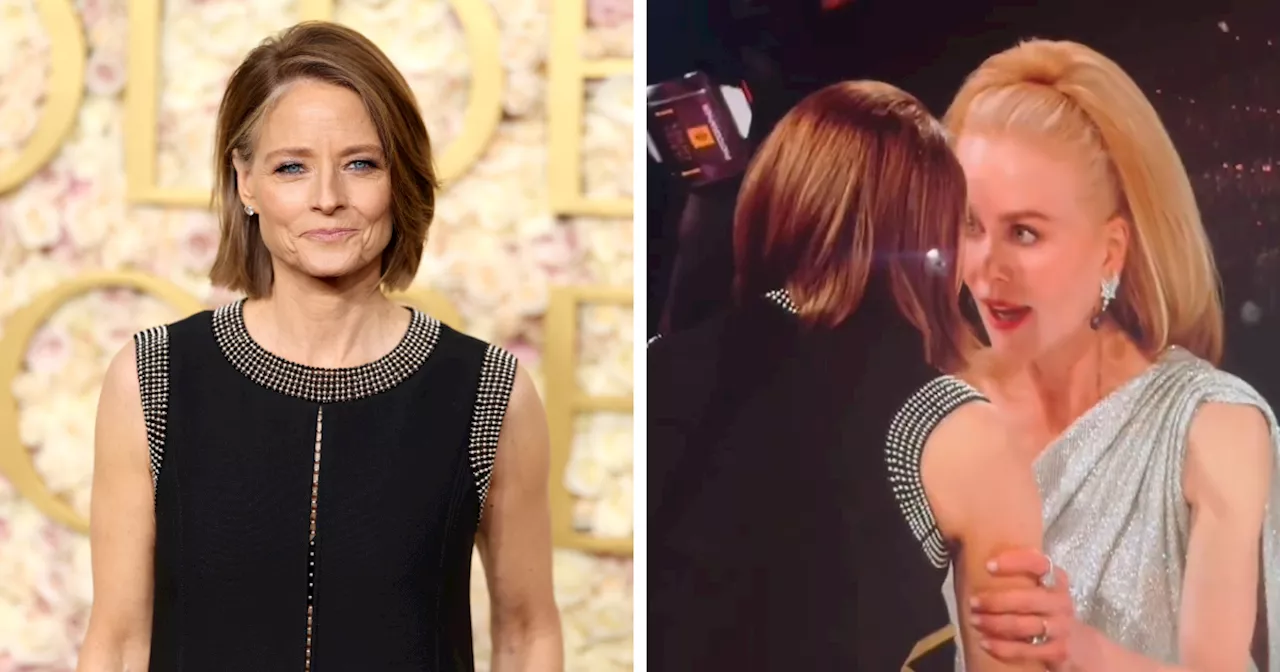 Jodie Foster and Nicole Kidman's Intense Conversation at the Golden Globes Sparks SpeculationA video of Jodie Foster and Nicole Kidman engaging in a seemingly intense conversation during a commercial break at the Golden Globes has gone viral. Body language experts have interpreted their proximity, strong eye contact, and small shaking movements as signs of a significant topic being discussed. Social media users have speculated about the nature of their conversation, with some believing they were discussing a future project or offering support to each other.
Read more »
 Jodie Foster and Nicole Kidman Engage in Intense Conversation at Golden GlobesA video capturing a passionate conversation between Jodie Foster and Nicole Kidman during a commercial break at the Golden Globes has gone viral. Body language experts interpret their intense eye contact, closeness, and gestures as suggesting a deep and possibly significant exchange. Social media users have speculated about the nature of their conversation, ranging from personal support to potential future collaborations.
Read more »
Jodie Foster and Nicole Kidman's Intense Conversation Sparks Speculation at Golden GlobesA viral video of Jodie Foster and Nicole Kidman's intense conversation during a commercial break at the Golden Globes has sparked speculation about the nature of their discussion. Body language experts suggest the interaction could signal a strong friendship, while social media users have tried to decipher what the actresses were saying.
Read more »