
Scientists have successfully analyzed more than 30 years of vital data on the thickness of landfast sea ice in Antarctica's McMurdo Sound, which will prove useful to measure future impacts of climate change.
Scientists have successfully analyzed more than 30 years of vital data on the thickness of landfast sea ice in Antarctica's McMurdo Sound, which will prove useful to measure future impacts of climate change.
University of Otago -- Ōtākou Whakaihu Waka scientists have successfully analysed more than 30 years of vital data on the thickness of landfast sea ice in Antarctica's McMurdo Sound, which will prove useful to measure future impacts of climate change., set out to discover what key influences determine the thickness of landfast sea-ice, known as fast ice, using data from 1986 to 2022. Fast ice is frozen ocean water that is attached to shorelines and persists for at least 15 days. It provides vital habitats for penguins and seals, as well as fish, krill and algae underneath the ice. Scientists also traverse around McMurdo Sound on fast ice to perform experiments and measure the ocean underneath and the atmosphere above. The ice needs to be stable and thick enough to do this safely. Instead of a long-term trend of increasing or declining thickness, the researchers found storm events, air temperature and winter wind speed cause fast ice thickness to vary year to year. Lead researcher Dr Maren Richter, who completed the research as part of her PhD at Otago, says fast ice in McMurdo Sound has not seen strong effects of climate change. "The ocean/ice/atmosphere system there seems to still be able to balance out effects of climate change. "We see a slight increase in air temperatures over the last 10 years of our study period, but if we look at air temperature over a longer time period there is no clear trend," she says. The study data shows what variability is 'normal' for the fast ice in McMurdo Sound and this can then be used to detect when things start to change, for example if a year is unusual or if a series of years start to form a trend toward different fast ice conditions. "The data analysed shows how important it is to monitor the Antarctic regularly and over many years. Only long time series of observations allow us to distinguish between natural variability and trends influenced by climate change." She hopes the new study will be useful for modellers to predict variations year to year, which would be useful for scientists planning research on the ice or to research station operators who want to know what ship to use to resupply the stations. The study could also be used to verify and train models that look decades into the future and try to see what average fast ice conditions will be like in 100 years' time with a lot more carbon dioxide in the atmosphere. "Now might be the last time we can observe some systems before effects of climate change dominate over natural variability." Co-author and Dr Richter's primary PhD supervisor, Associate Professor Inga Smith, of the Department of Physics, says although the total fast ice area is much smaller than the pack ice in Antarctica, it has very important roles to play in Earth's climate system and for the breeding success of penguins and seals. "We know very little about how fast ice behaves over long periods of time which means we cannot currently predict future changes," she says. Dr Richter points out that 30 years of observations is still"quite short" when talking about trends in climate. "There might have been changes in earlier years which we do not know about because we were not measuring fast ice thickness. "I also want to stress that although there was no trend in fast ice thickness in McMurdo Sound, other areas around Antarctica do show trends in fast ice thickness, extent and persistence." *Dr Richter's PhD research was supervised by Associate Professor Inga Smith, Dr Greg Leonard, of the School of Surveying, and Professor Pat Langhorne, of the Department of Physics.A proposal to cover Arctic sea ice with layers of tiny hollow glass spheres about the thickness of one human hair would actually accelerate sea-ice loss and warm the climate rather than creating ... Global warming is causing a rapid decline in sea-ice area, which affects weather patterns and, surprisingly, increases wave height in the Arctic. In a new study, Japanese scientists analyzed data ... New, detailed study of the Renland Ice Cap offers the possibility of modelling other smaller ice caps and glaciers with much greater accuracy than hitherto. The study combined airborne radar data to ... As temperatures rise due to climate change, the melting of polar ice sheets is accelerating. An international team of scientists has now examined the dynamics of the East Antarctic Ice Sheet more ...
Climate Ice Ages Snow And Avalanches Environmental Awareness Oceanography Environmental Issues Severe Weather
Canada Latest News, Canada Headlines
Similar News:You can also read news stories similar to this one that we have collected from other news sources.
 Scientists Propose a Purrfect Solution to Antarctic IsolationA group of scientists at McMurdo Station, the main Antarctic research base, are advocating for the introduction of a station cat to boost morale during the long, dark Antarctic winter.
Read more »
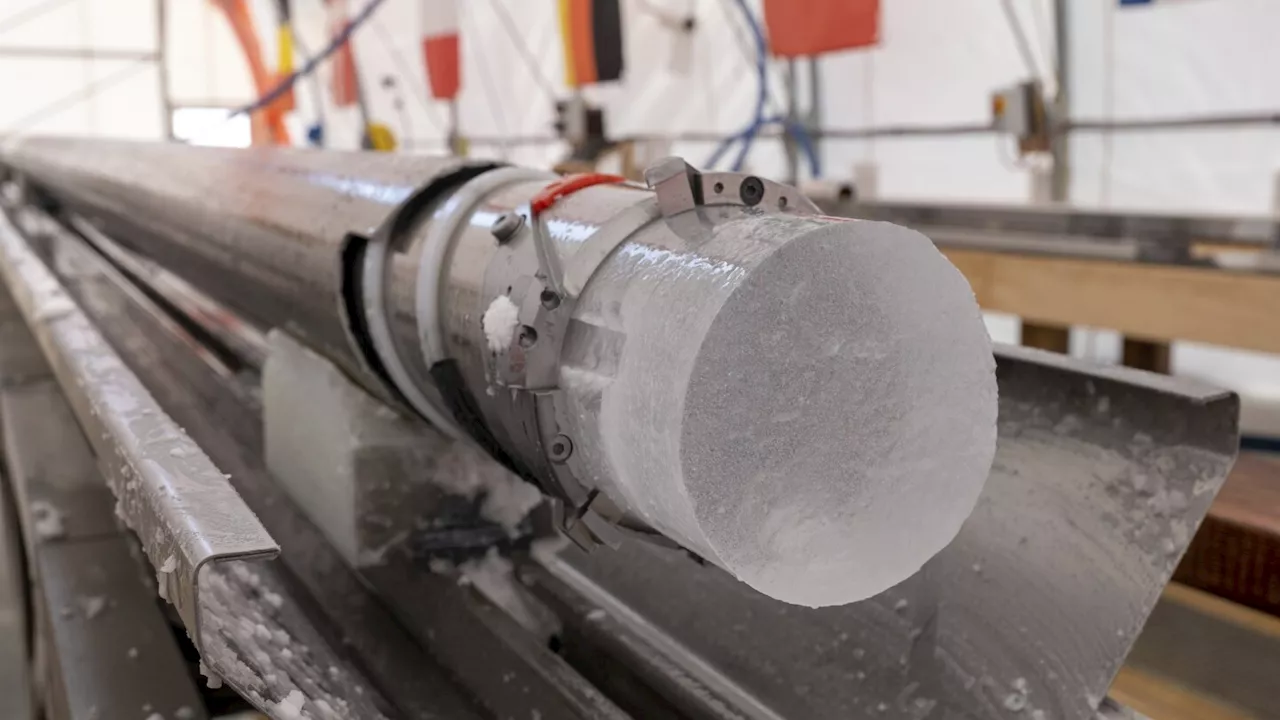 Scientists drill nearly 2 miles down to pull 1.2 million-year-old ice core from AntarcticAn international team of scientists say they’ve successfully drilled one of the oldest ice cores yet, penetrating nearly 2 miles to Antarctic bedrock to reach ice that's at least 1.2 million years old. The project was completed in January by a European-funded project called Beyond EPICA.
Read more »
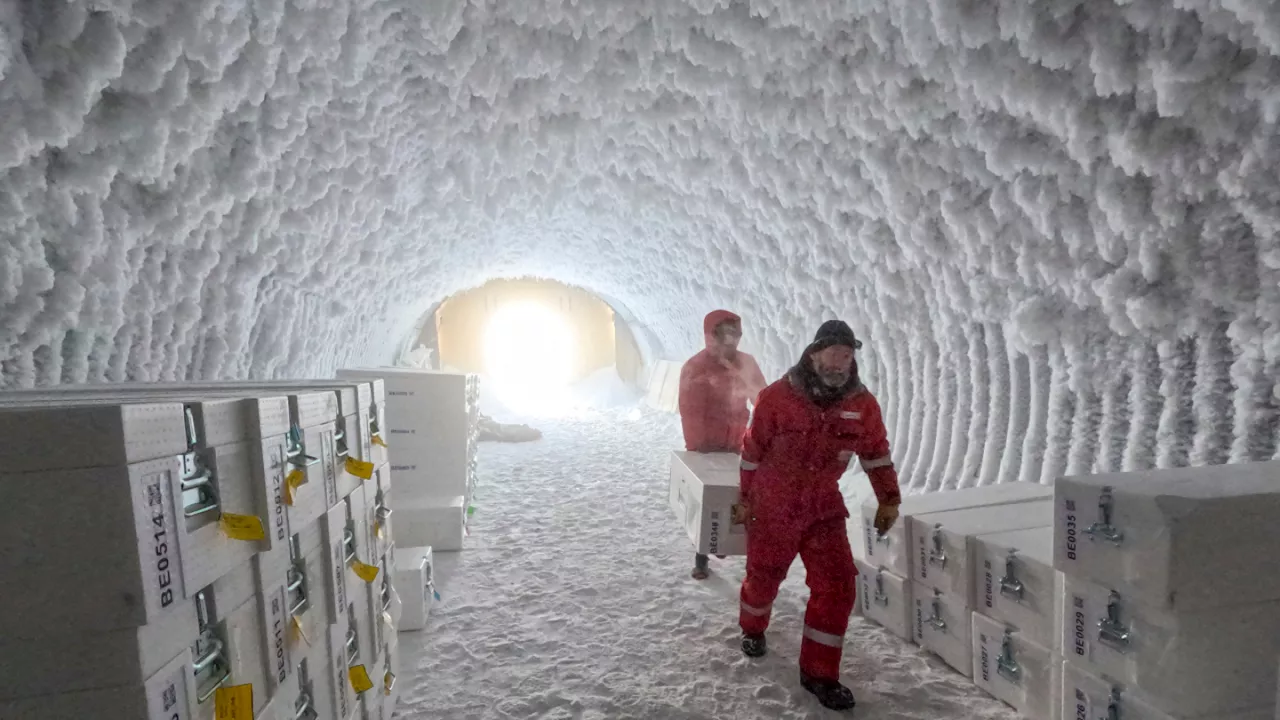 Scientists drill nearly 2 miles down to pull 1.2 million-year-old ice core from AntarcticaAn international team of scientists say they’ve drilled nearly 2 miles to Antarctic bedrock, retrieving one of the oldest ice cores at 1.2 million years old.
Read more »
Scientists drill nearly 2 miles down to pull 1.2 million-year-old ice core from AntarcticaAn international team of scientists say they’ve drilled nearly 2 miles to Antarctic bedrock, retrieving one of the oldest ice cores at 1.2 million years old.
Read more »
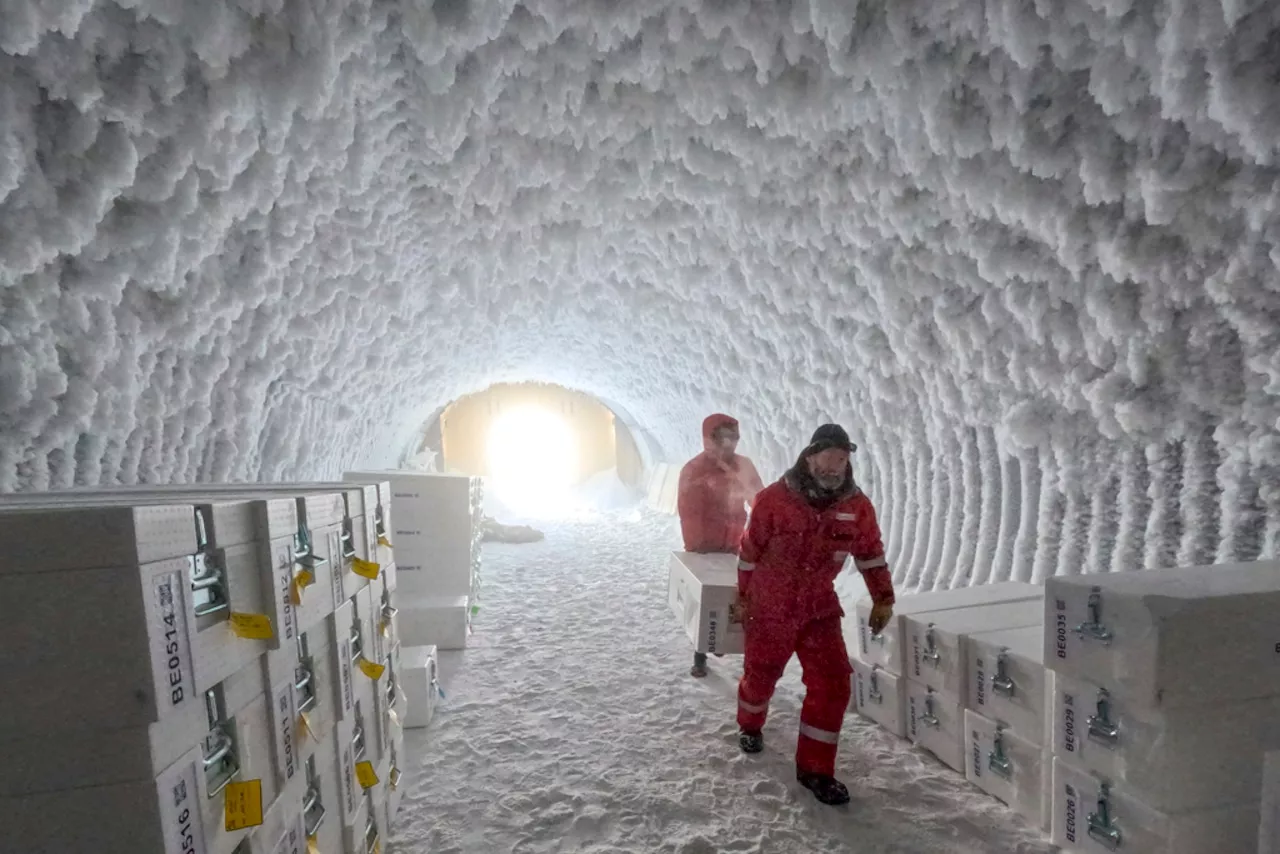 Unlocking Earth’s climate secrets: Scientists drill nearly 2 miles deep in AntarcticaScientists drill nearly 2 miles down to pull 1.2 million-year-old ice core from Antarctic
Read more »
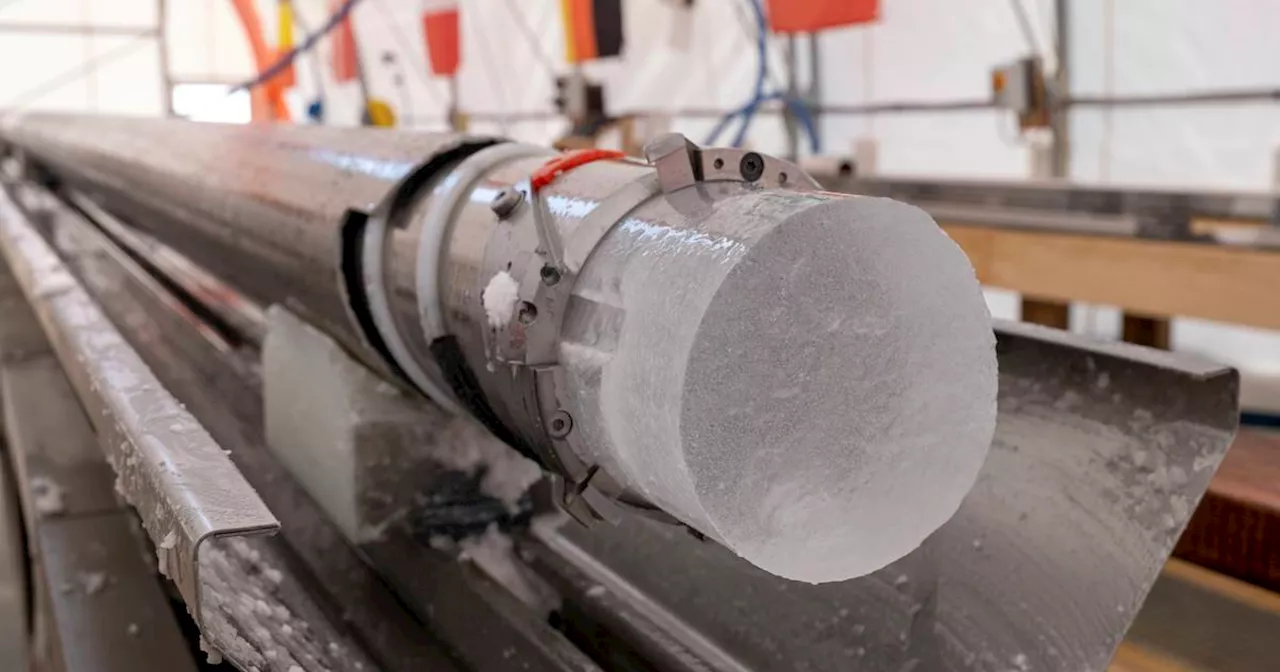 Scientists pull 1.2 million-year-old ice core from Antarctic bedrockAnalysis of the ancient ice should provide a record of changes in Earth’s atmosphere and climate.
Read more »